

information
- Home / News/ information
ASTA Seaweed: Vietnamese Asparagopsis Reduces Livestock Methane
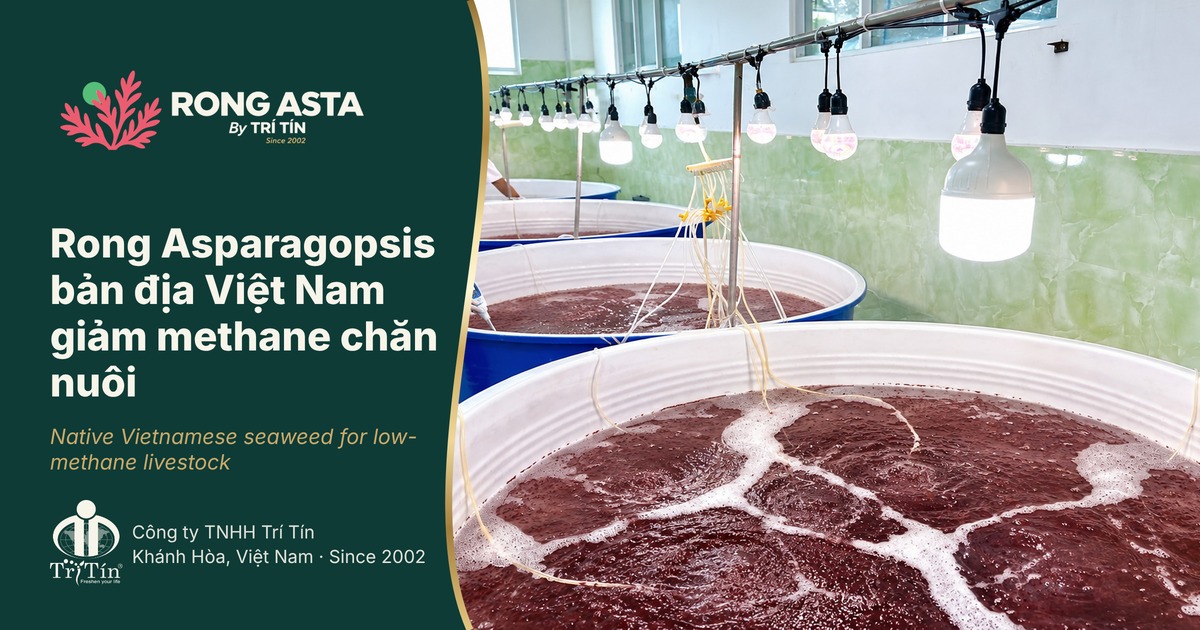
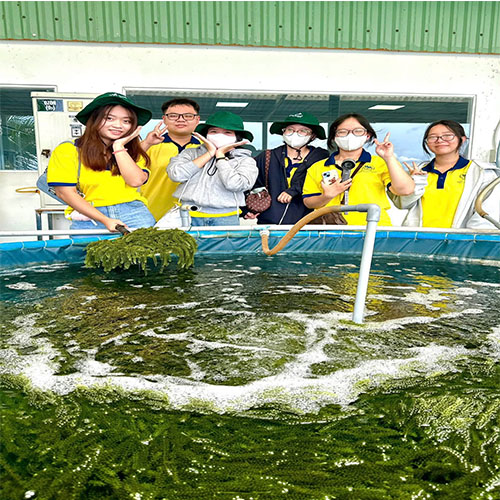
Each cow produces substantial methane (CH₄) emissions annually during digestion. ASTA Seaweed by Tri Tin—a native Khanh Hoa red seaweed (Asparagopsis taxiformis) grown in closed land-based tanks—serves as a feed additive to curb livestock methane.
Livestock Methane: An Unresolved Domestic Challenge
Methane is a greenhouse gas roughly 28 times more potent than CO₂ (over a 100-year timeframe). Ruminants such as cattle, goats, and sheep produce methane in their rumen and can lose up to 12% of their dietary energy through this process.
Vietnam has over 9 million ruminants and has joined global commitments to reduce methane emissions by at least 30% by 2030 compared to 2020 levels. Consequently, the demand for methane-reducing feed additives is immense, yet domestic supply remains virtually nonexistent.
How Asparagopsis Seaweed Reduces Methane
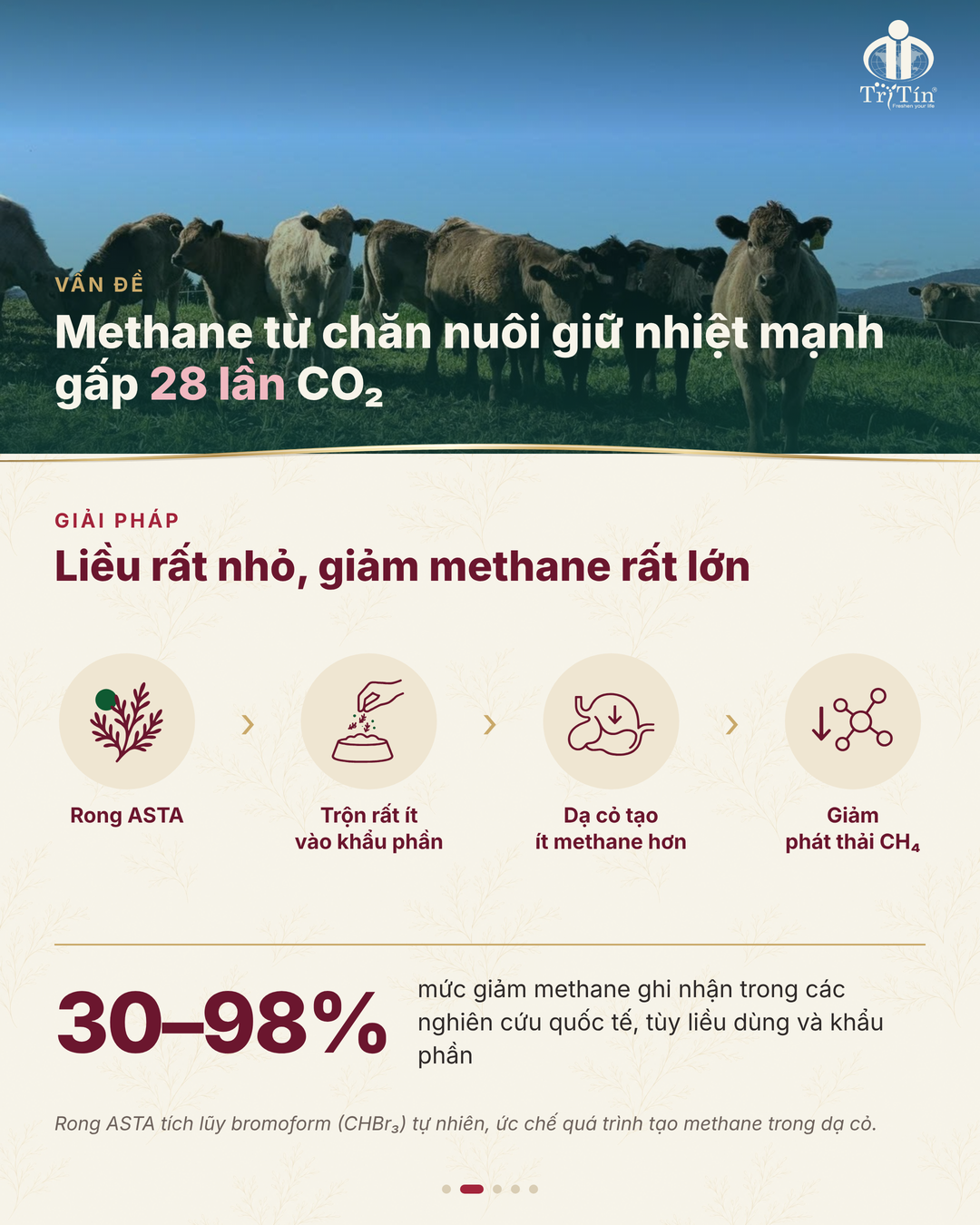
The red seaweed Asparagopsis taxiformis naturally accumulates the compound bromoform (CHBr₃). When supplemented in very small amounts into the diet, this compound inhibits methane production by microorganisms in the rumen.
International studies have recorded methane reductions ranging from 30% to 98%, depending on dosage, diet, and trial conditions. Livestock farmers can simultaneously improve feed efficiency and meet low-emission farming requirements.
What Makes ASTA Seaweed Different
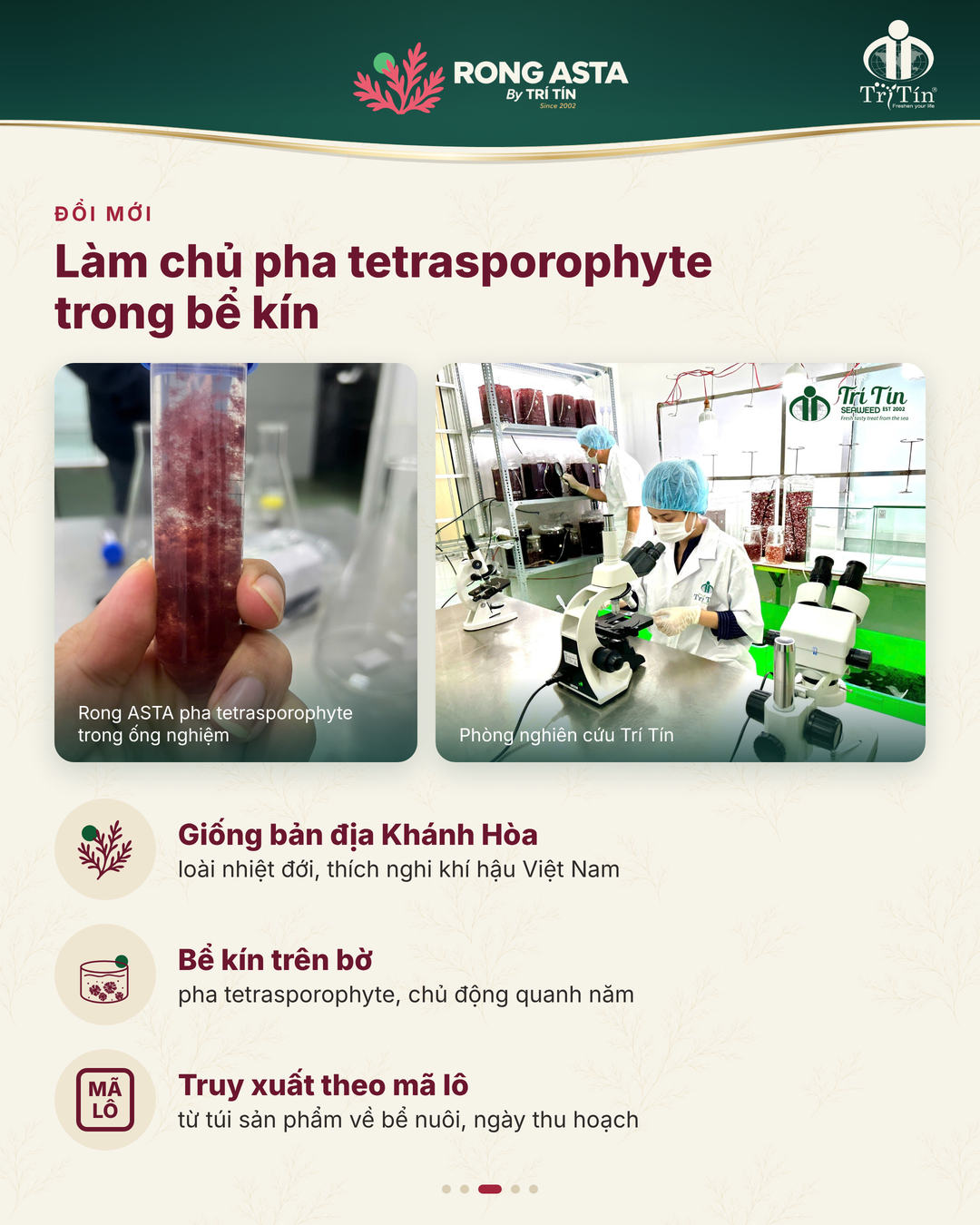
- Native Khanh Hoa Strain. A tropical species naturally recorded in the waters of Khanh Hoa, well-adapted to Vietnam's climate.
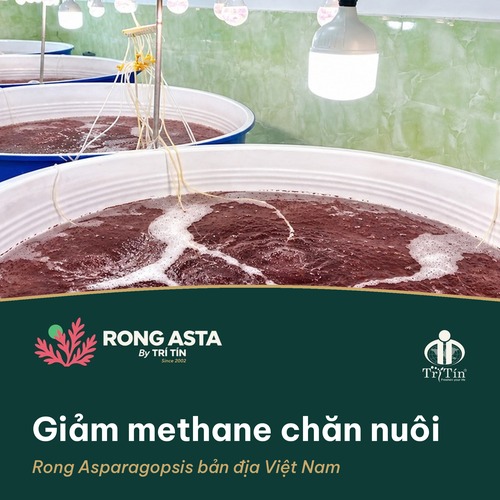
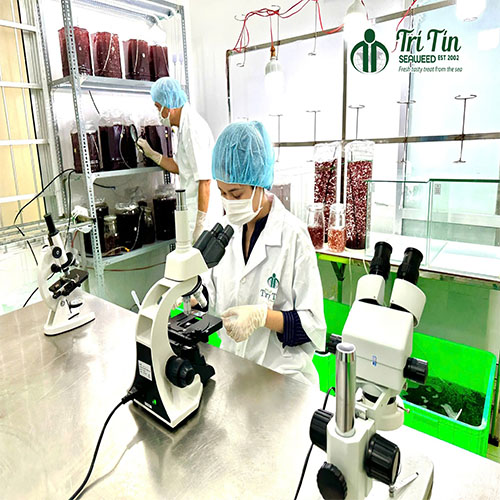
- Onshore Closed-Tank Cultivation of the Tetrasporophyte Phase. Tri Tin has mastered cultivating the seaweed in its tetrasporophyte phase (fine filamentous tufts) within closed tanks. The controlled environment enables proactive, year-round production independent of marine weather conditions.
- Active-Compound-Preserving Processing. Appropriate technical solutions are applied to retain optimal bromoform content.
- Batch-Code Traceability. Every product bag can be traced back to its exact cultivation tank and harvest date.
- Over 20 Years of Seaweed Expertise. Tri Tin was the first company to introduce sea grapes (Caulerpa lentillifera) to Vietnam (2004) and has exported them to Japan since 2006; its dehydrated sea grapes achieved the National 5-Star OCOP certification, and its factory is HACCP-certified.
Commercial Asparagopsis cultivation technology worldwide is still nascent, with no officially published standardized protocols. ASTA Seaweed is the result of dedicated research and practical trials conducted by the Tri Tin Seaweed Technology Development Center.
ASTA Seaweed Today
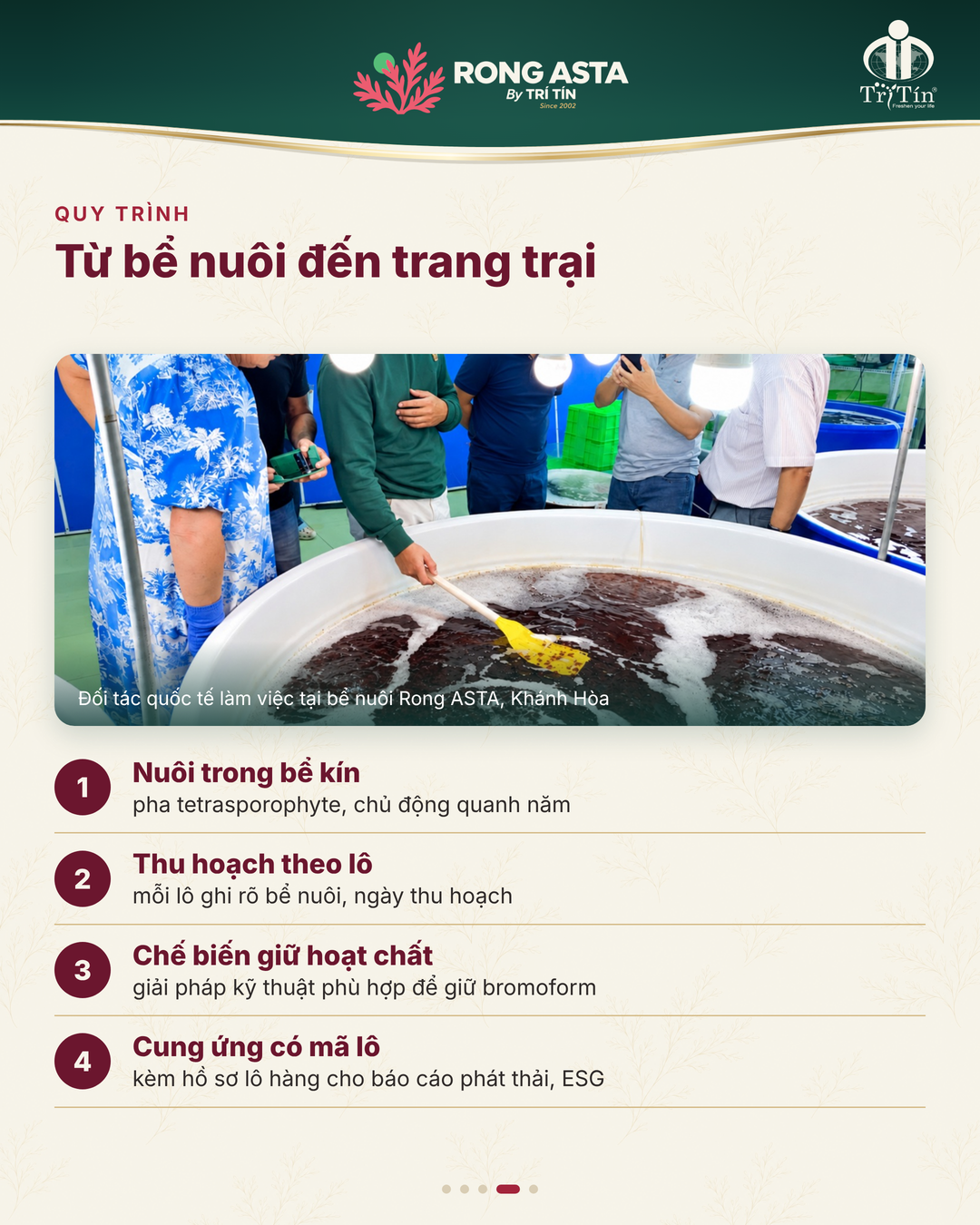
- Mastered cultivating the tetraporophyte phase in closed tanks, with stable year-round harvests.
- Fully packaged product: dried seaweed in 10 g sample packs, each bag featuring a traceable batch code.
- Hosted Asparagopsis cultivation and development partners from Australia for on-site surveys and working sessions.
- HACCP-compliant facility design, ready to scale up production capacity according to partner demand.
Cultivating Asparagopsis is challenging. This seaweed species has a multi-phase life cycle, with each phase requiring specific conditions. Tri Tin chose to cultivate the tetrasporophyte phase in closed tanks to ensure a stable, batch-to-batch uniform supply of raw materials—something that wild ocean harvesting struggles to guarantee.
Who ASTA Seaweed Is For
- Large-scale dairy, beef cattle, goat, and sheep farms with emission reduction targets.
- Animal feed manufacturers, dairy, and meat companies striving toward Net Zero.
- Importers and distributors of Asparagopsis raw materials in Australia, Europe, and the US.
- Research institutes and universities seeking collaboration on methane research and measurement.
- Climate funds and green investment funds interested in livestock emission reduction solutions.
How to Collaborate
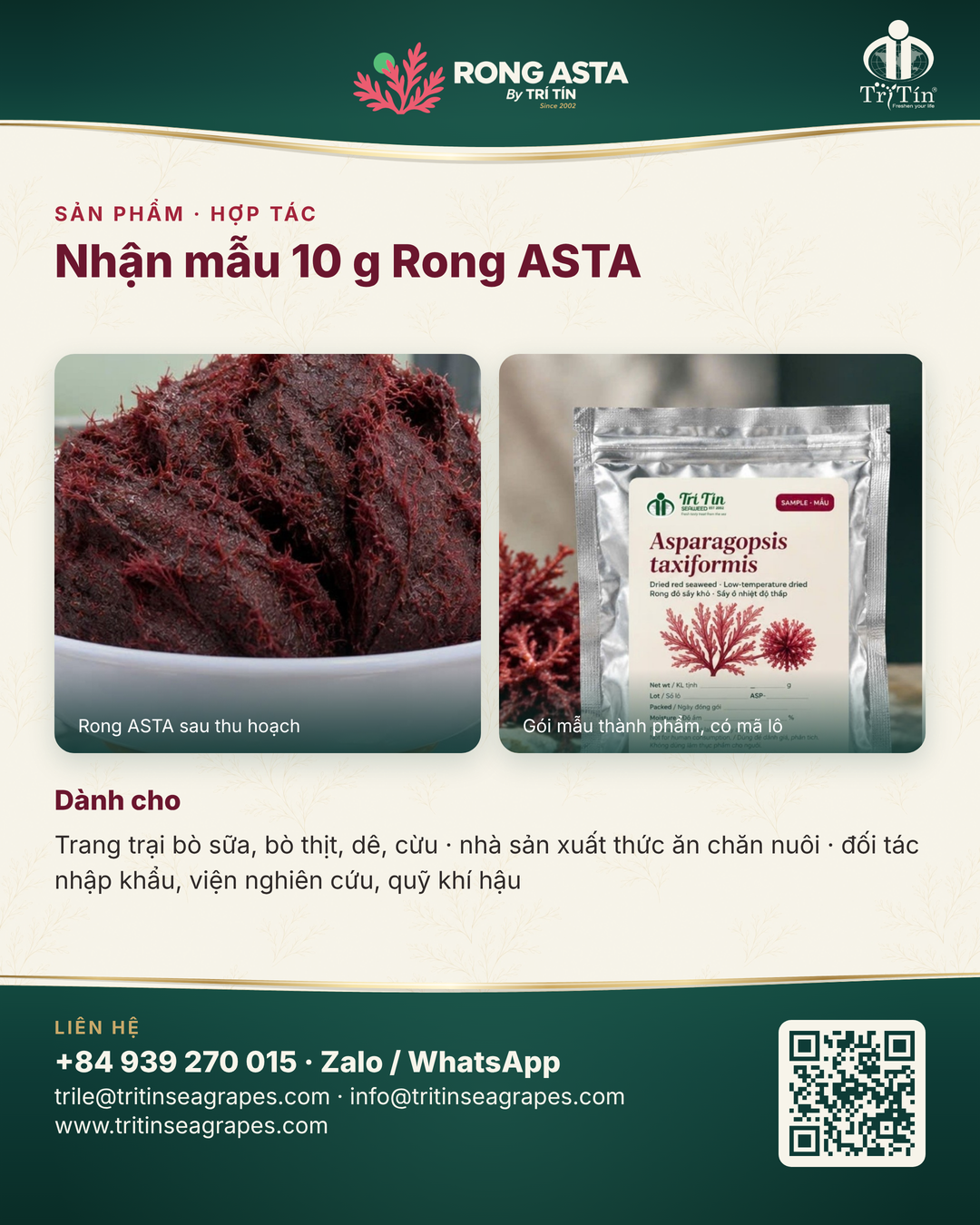
- Receive a 10 g sample pack accompanied by a product specification sheet (form, moisture content, packaging specifications, storage instructions, and latest bromoform test results). The sample pack is intended for quality evaluation and testing.
- Align on the appropriate dosage tailored to the farm's actual ration, based on the batch's bromoform content and published research.
- Place a trial order, followed by signing a batch-based supply contract, with every batch assigned a traceability code.
- Receive batch documentation (batch code and periodic test results) to support corporate emission and ESG reporting.
Thursday, 09:08 Day 22/10/2026
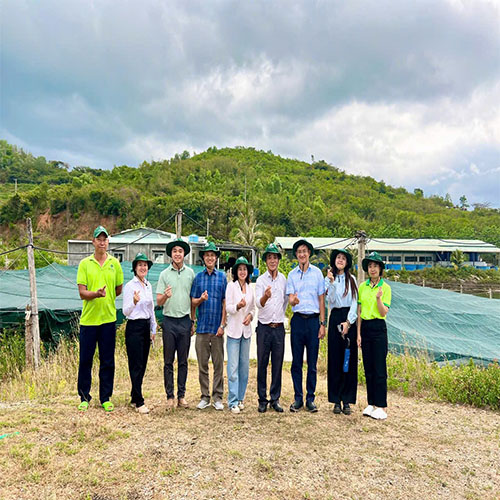
TRI TIN WELCOMES DELEGATION FROM THE INSTITUTE OF VIETNAMESE AND WORLD ECONOMY AND THE QUANG NINH DEPARTMENT OF SCIENCE AND TECHNOLOGY: PROMOTING CIRCULAR ECONOMY IN SUSTAINABLE AQUACULTURE
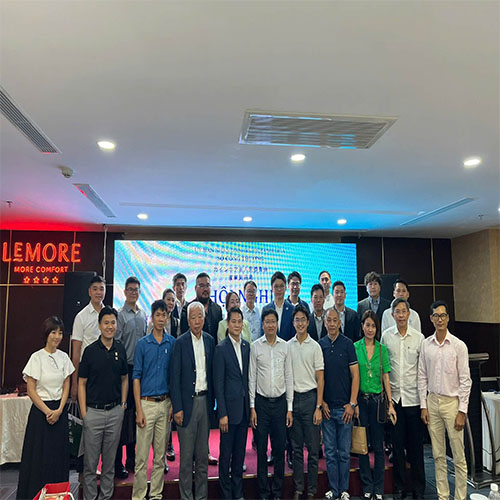
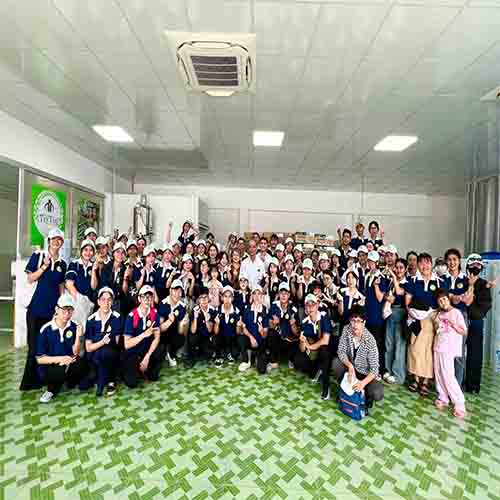
Within the framework of Vietnam Science, Technology, and Innovation Week, Tri Tin Co., Ltd. proudly welcomed a delegation from the Institute of Vietnamese and World Economy and the Quang Ninh Department of Science and Technology for a working session and field survey on green technology and circular economy models in aquaculture.
Monday, 09:50 Day 02/11/2026
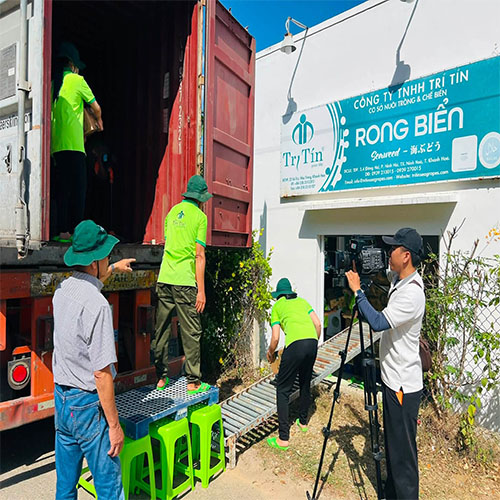
THE JOURNEY OF EXPORTING SEA GRAPES TO THE US: RESILIENCE THROUGH CHALLENGES, AFFIRMING TRUST
Every shipment of Tri Tin sea grapes to the US is a chronicle of resilience. Overcoming harsh weather and procedural barriers, we steadfastly preserve the value of Vietnamese agricultural products on the international stage.


Friday, 16:59 Day 30/10/2026
TRI TIN SEA GRAPES ACHIEVES HALAL CERTIFICATION: DRIVING EXPORT BREAKTHROUGHS INTO THE INTERNATIONAL MUSLIM MARKET
By meeting the strict criteria of HALAL certification at the HALAL Tourism Conference, Tri Tin Sea Grapes has opened doors to strategic partnerships, hosting official trade delegations from the UAE, Malaysia, and Singapore.

Friday, 15:05 Day 07/03/2025
TRI TIN CO., LTD - KINDNESS AND RESPONSIBILITY IN EACH PRODUCT LINE
The article was published in the Vietnam Business Forum magazine of VCCI in April 2024 in a series of general introductions about Khanh Hoa province.

Tuesday, 08:54 Day 10/11/2026
ASTA Seaweed: Vietnamese Asparagopsis Reduces Livestock Methane
Rong ASTA – rong Asparagopsis bản địa Việt Nam giúp giảm phát thải methane từ chăn nuôi Each cow produces substantial methane (CH₄) emissions annually during digestion. ASTA Seaweed by Tri Tin—a native Khanh Hoa red seaweed (Asparagopsis taxiformis) grown in closed land-based tanks—serves as a feed additive to curb livestock methane.

Tuesday, 09:15 Day 11/03/2025
THE MAN WHO TURNED SEA GRAPES INTO GREEN GOLD
More than twenty years ago, on the sea of Hon Khoi, Ninh Hoa Town, Khanh Hoa Province, the first small branches of seaweed were planted by us with the desire to bring a green, clean, nutritious product from the ocean. From the challenging early days to today, Tri Tin Sea Grapes has become a prestigious brand, meeting the National 5-star OCOP standard, affirming the position of Vietnamese seaweed in the world.

TRI TIN COMPANY LTD
Tax code: 4200481770 issued by Khanh Hoa Department of Planning and Investment on 12/03/2002
35 Vo Tru Street, Nha Trang Ward, Khanh Hoa Province.


Fanpage
Connect with us at:


Copyright © 2020 Copyright by TRI TIN CO., LTD